4105 Unit 4 5219 50th Ave, Olds AB T4H 1P7
Call Us Today:
(403) 791-3303

Blog
 18 Jun 2024
By: odic1_admin
1 Comment
Denture Cost Guide in Central Alberta
When it comes to replacing missing teeth, dentures offer a reliable and affordable solution for many individuals. At Olds Denture & Implant Centre, we understand that cost is a significant factor in dental care decisions. In this denture cost guide, we’ll explore the average cost of dentures and the different types available to help you make an informed choice.
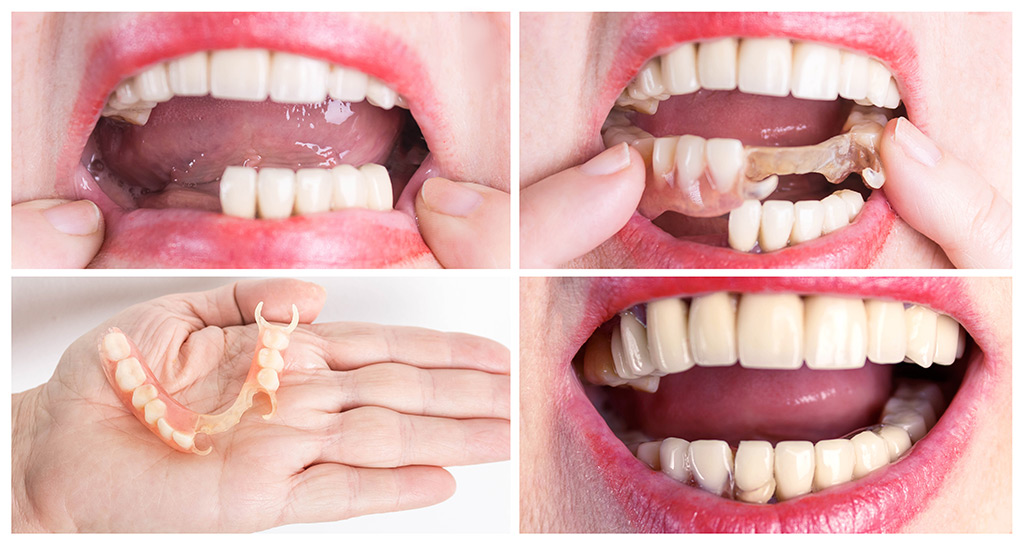
Cost of Dentures
The cost of dentures can vary depending on several factors, including the type of denture, materials used, and the complexity of the case. Traditional removable dentures, the most common type, are typically the most affordable option. Partial dentures, used when only some teeth are missing, are also available at a lower cost compared to full dentures. Implant-supported dentures, which offer a more stable and natural-looking option, may have a higher upfront cost but provide long-term benefits.
Types of Dentures
Complete Dentures
Complete dentures are usually considered to replace teeth that have been extracted due to serious gum disease or tooth decay. They refer to a full set of replacement teeth that are used in the lower or upper maxillary regions.
At Olds Denture and Implant Centre, we offer two different types of complete dentures. One is Standard Dentures, and the other one is Complex Dentures. Standard Dentures usually create more of an artificial function when it comes to articulation and chewing. They are a more cost-effective option compared to Complex Dentures.
Immediate Dentures
These are dentures that are required when there is no other choice but to extract your natural remaining teeth. They’re called Immediate Dentures because they are required to allow you to eat and nourish your body.


Removable Dentures on Implants
While in many cases partial or full dentures may be the best option, dental implants can often be a great solution as well.
Some of the benefits of dentures attached to implants are better stability when eating, less food seepage in and around the teeth, better bone preservation, decreased gum tissue shrinkage, and better dietary nutrition. Additionally, patients feel much more confident in their appearance since dental implants both look and feel more like natural teeth.
Partial Dentures
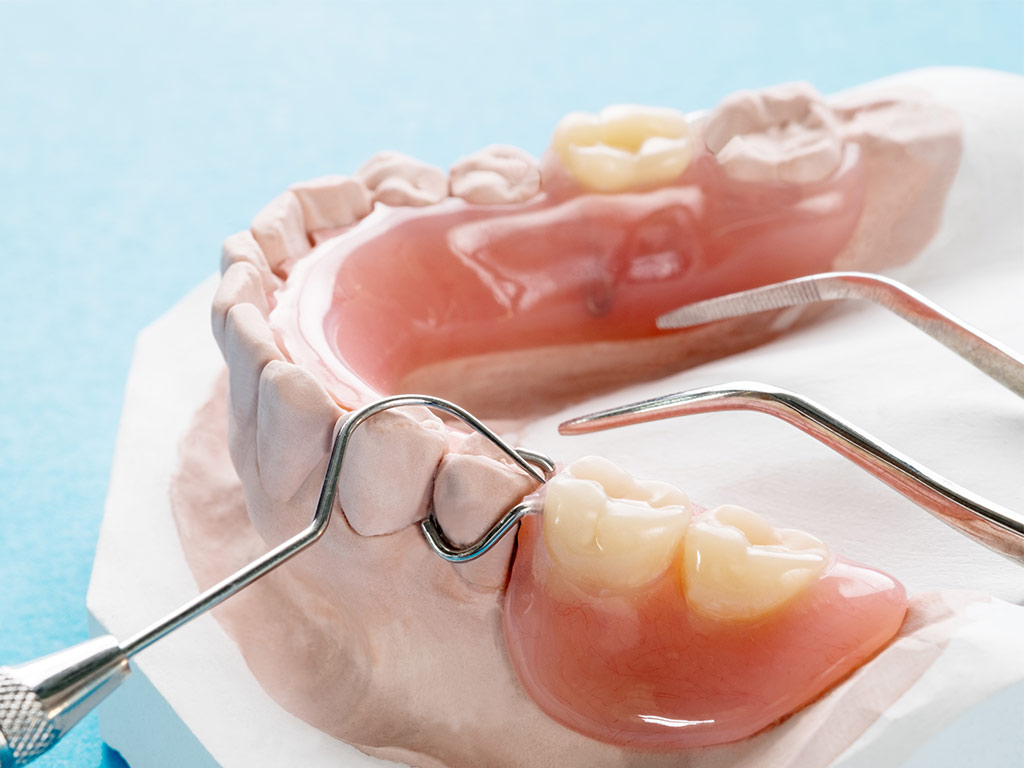
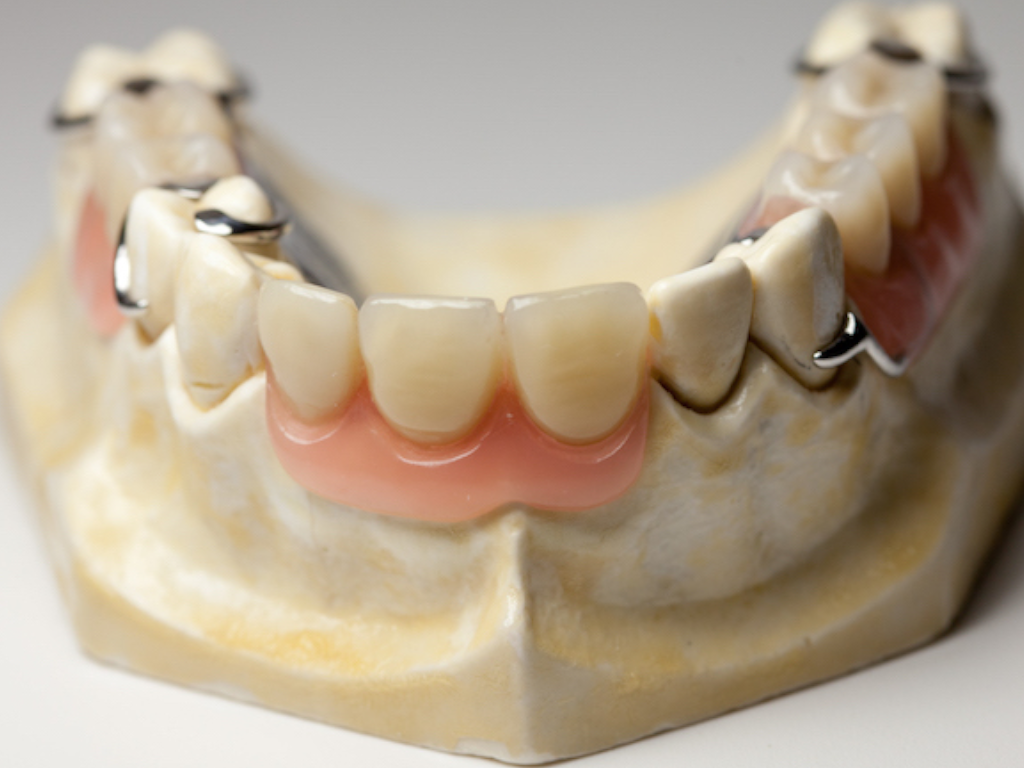
These are used when you still have one or more natural teeth remaining. Partial Dentures can be fabricated to be tooth-supported, tissue/tooth-supported, or implant/tooth-supported, and will be constructed of materials such as acrylic and metal.
Removable Dentures on Implants
While in many cases partial or full dentures may be the best option, dental implants can often be a great solution as well.
Some of the benefits of dentures attached to implants are better stability when eating, less food seepage in and around the teeth, better bone preservation, decreased gum tissue shrinkage, and better dietary nutrition. Additionally, patients feel much more confident in their appearance since dental implants both look and feel more like natural teeth.
Partial Dentures
These are used when you still have one or more natural teeth remaining. Partial Dentures can be fabricated to be tooth-supported, tissue/tooth-supported, or implant/tooth-supported, and will be constructed of materials such as acrylic and metal.
Choosing Affordable Dentures
At Olds Denture & Implant Centre, we believe that everyone deserves access to quality dental care at an affordable price. That’s why we offer a range of denture options to fit your budget and needs. Our experienced team will work with you to find the best solution that aligns with your financial situation without compromising on quality or comfort.
Whether you’re considering traditional removable dentures, partial dentures, or implant-supported dentures, we’re here to help you achieve a beautiful and functional smile that you can afford. Contact Olds Denture & Implant Centre in Central Alberta today to schedule a consultation and take the first step towards restoring your confidence and oral health with affordable dentures.

Need more answers?
Talk to our denturist Michael Galye. They can help determine pathways for you to take when suffering from dry mouth while wearing dentures. If you are looking for a trustworthy denturist, reach out to us at Old’s Denture & Implant Centre. We have the experience you are looking for and can help you feel comfortable wearing your dentures. After all, correctly fitting dentures are essential to your well-being!
 20 May 2021
Everything You Need To Know About Dentures in 2022
Everything You Need to Know About Dentures in 2022
(Updated Sep 22, 2022)
It is normal to have questions about dentures, whether you wear them already or are considering getting a pair for the first time. Dentures offer a potential solution to many different situations, such as helping offering a comfortable alternative to anyone suffering from tooth loss. However, dentures can also help preserve your remaining teeth. Thanks to advancements in modern denture technology, the denture options available to patients are better now than ever before.
Let’s start with the basics… what are dentures?
In their simplest form, dentures are artificial teeth. Thanks to recent advancements in denture technology, modern dentures have become so much more than that.
Technically, dentures are artificially created replacements that are formed specifically to fit into your mouth in order to replace your natural teeth and sit comfortably against your gums.
A consultation with a denturist will help you discover how you can benefit from dentures and which kind of denture is right for your unique situation.
How many types of dentures are there?
If you need dentures, trying to determine which type if right for you can seem intimidating. There are many different dentures available to fit a variety of different oral situations, such as full dentures, partial dentures, snap-in dentures, and implants, just to name a few.
If you are interested in reading more about these types of dentures, check out this helpful article on the different types of dentures available today.
Most dentures can be classified as one of two categories: full or partial. A full denture usually acts as a replacement for all teeth while a partial denture is used to replaced just a few missing teeth while resembling your remaining teeth as closely as possible.
Why do people wear dentures?
Everyone has their own unique reason for wearing a denture. A full denture can help return a patient’s confidence to smile again after losing their natural teeth and offers a more natural eating experience. Others wear dentures to maintain the structure of their mouths by supporting the structures around their lips and cheeks.
Dentures also offer a viable solution for patients who suffer from severe tooth pain and other uncomfortable oral health issues. In these cases, dentures replace the problematic teeth with a healthy and aesthetic option.
Who wears dentures?
There is a common myth that dentures are only for senior citizens. This is NOT true. Today, dentures can benefit many different people: sports players who are missing teeth, victims of vehicle accidents, people with genetic disorders or poor oral hygiene, and people who suffer from painful oral health issues like rotted roots.
What materials are used to make dentures?
The artificial teeth on dentures are made from a hard resin while the supporting structure that rests along your gums is made with a flexible polymer that fits snugly against your natural gum line.
This was not always the case. The material of choice for artificial teeth used to be porcelain because its natural colour resembled natural pearly whites and it is an extremely durable material. While some porcelain dentures can still be found today, most denturists have switched to acrylic because of its lighter properties, better adhesion to the denture base, and overall health benefits to the patient.
Will people be able to tell that I am wearing dentures?
Thanks to new materials and advanced methods in crafting dentures, most new dentures do not look any different than your natural teeth. A benefit of using acrylic is that it gives denturists the ability to colour match your artificial teeth to your remaining natural ones.
Depending on what type of denture you wear, it may slip or click while you eat, which might seem odd, but most dentures are unnoticeable to the common eye.
How do I properly clean my dentures?
Just like natural teeth, bacteria, plaque, and tartar build up on dentures and can hurt your oral and physical health unless cleaned regularly. Unlike your natural teeth, dentures are more delicate. Regardless of the type of denture you wear, it should be cleaned daily to remove any bacteria, plaque, or tartar build-ups.
You can do this by removing your denture (if possible) and running it under water to remove any large food particles. Then brush them with a very soft toothbrush and gentle denture cleaner to dislodge any particles that may be stuck between the teeth. Rinse your dentures thoroughly again before returning it to your mouth to make sure there is no cleaner residue.
Be careful not to use a stiff-bristled toothbrush, electric brush, or regular toothpaste, as all these things are too abrasive and can wear away at the denture material and reduce the life of your dentures.
Can I sleep with my dentures in?
While some forms of dentures are permanent and do not need to be removed, we recommend not sleeping with your removable dentures in your mouth. Sleeping with your dentures in can damage or dislodge them, while removing your dentures will give your gums and bone a chance to heal from the pressure of wearing them during the day.
Soaking your dentures in warm water or a denture solution from your denturist while you sleep will help prevent your dentures from becoming dry and deformed.
Some dentures may be worn to prevent your jaw from over closing, in which case your denturist may recommend leaving your dentures in while you sleep. This is perfectly safe, but it is usually a good idea to find time during the day when you can take them out to clean them properly.
Will dentures impact my ability to eat?
It takes time to properly adjust to wearing dentures, especially if it is your first time wearing a dental appliance. While you are getting used to your new dentures, eating may be slightly uncomfortable, but this will subside over time. It is important to be patient and remember that your dentures will make eating easier than with no teeth.
It will take even more time to adjust to eating hard or sticky foods, as these can damage your dentures. It may be best to avoid certain foods to help preserve your dentures, like chewing gum. Gum will stick to the acrylic teeth and can potentially break a seal and loosen your dentures.
How long can I expect my dentures to last?
Dentures are made specifically to fit your mouth, but your mouth shifts and changes with age. Over time, your dentures will need to be realigned to keep them fitting properly and feeling comfortable. The rate at which you will need a realign differs for every patient, depending on what type of denture you wear. Your denturist will schedule routine check ups once you start to wear your denture to monitor how well it fits and make any changes, as necessary.
While dentures are made to withstand everyday activities, they are unfortunately not as durable as natural teeth. It is common for dentures to chip or crack, so it is recommended that you replace your dentures every 5 to 8 years, depending on what type of denture it is, what oral changes your mouth experiences, and what regular use your denture sees.
What if I have more questions?
It is natural to have questions about dentures when you are considering wearing one for the first time. Every patient has different oral requirements and personal circumstances, so some of the answers to the above questions may differ depending on your unique situation.
If you are interested in knowing how dentures will affect you directly, please schedule a consultation with a reputable and professional denturist, like Olds Denture & Implant Centre.
The denturist, Mike Galye, offers free consultations so you can feel confident when making a decision about dentures.
Schedule your first visit today by speaking with his friendly team at (403) 791-3303.
 06 Jul 2020
5 Tips for More Comfortable Dentures
5 Tips for More Comfortable Dentures
For first-time denture wearers, you may be experiencing some mild discomfort. This is perfectly normal. Small amounts of gum sensitivity or discomfort is to be expected when wearing dentures for the first time as it is a foreign object that your mouth is not yet accustomed to wearing.
Depending on the level of discomfort you are experiencing, you may be tempted to take your dentures out. It’s important to practice patience when getting used to your new dentures in order to feel more comfortable sooner, but if you are anxious to find some relief, here are 5 things you can do to make wearing dentures more comfortable.
1) Try Smaller Portions
It will take time for eating to feel normal again after getting new dentures. If you are experiencing some sensitivity, it can be uncomfortable to eat hard or crunchy foods, like apples or tough red meats. Try to avoid cutting these items out of your diet all together, as altering your nutrition intake can negatively affect your overall health.
Instead, try taking smaller portion sizes when eating to make it easier to chew. Supplement your meals with softer foods that are easier to chew and swallow while slowly introducing more and more hard food as you can handle it. This will give your mouth a chance to adapt to eating with dentures and reduce the amount of discomfort you experience.

2) Sing
If you are having difficulty articulating words with your new dentures, try not to let this bother you. Frustration will only increase your discomfort. Instead, try singing along to your favourite songs. Speech therapists use music as a form of speech training for people with stutters.
The smooth and slow phrases in songs can help you become familiar with forming certain words while wearing your dentures. Music can also have a calming affect on your mood, helping you keep calm and practice patience when adjusting to your new appliance.
3) Exercise Your Cheeks
Exercising the main muscle in your cheeks, the buccinator muscle, will make the transition to dentures easier and more comfortable. The buccinator muscle is used to chew, but it is also used to blow, whistle, suck, and, most importantly, smile. By exercising this muscle both before and after getting your dentures, it will give you more control over the food you are eating. It will also help you show off your beautiful new smile.
Don’t worry, you can exercise your cheeks from the comfort of your home. A simple exercise you can try is to slowly open your mouth wide, like a lion roaring, and hold this pose while practicing deep breathing for 30 seconds. An exaggerated smile will also help tone your buccinator muscle and can also improve your mood.
4) Use a Dental Adhesive
Your denturist may suggest using a dental adhesive or cream if you are struggling to adapt to wearing new dentures. These adhesives are helpful to keep your dentures in place, which can help eleviate some discomfort when you start wearing dentures. Having a sturdier denture will feel more natural and be easier to adapt to.
Always consult your denturist before trying a new adhesive to be sure it won’t harm your gums, dentures, or your health. Not every type of denture can benefit from a denture adhesive and you want to be careful not to mask an ill-fitting denture with adhesive. Sometimes a slight adjustment is needed to make your dentures fit better so if discomfort persists while using an adhesive, please see your denturist.
5) Follow Your Denturist’s Advice
In order to ensure lasting comfort while wearing dentures, follow the post-care plan that your denturist has created for you. Recovery time will be different for every patient, as everyone heals at different rates and different types of dentures need different recovery times. For example, denture implants are likely to take longer to heal than partial dentures as they have been surgically implanted.
The most important thing you can do to speed along your recovery, no matter the type of denture, is to attend every appointment with your denturist and follow their advice. They will be able to help increase your comfort with adjustments, medication, and other recommendations that are specific to you and your new dentures.
If you are looking for a reliable and knowledgeable denturist, contact Michael Galye at Olds Denture and Implant Centre today. He and his expert staff will ensure you receive the best denture care possible and will help you comfortably adapt to your new dentures.