4105 Unit 4 5219 50th Ave, Olds AB T4H 1P7
Call Us Today:
(403) 791-3303

Blog
 31 Mar 2022
What is Denture Repair?
What is a denture repair? Denture repair is performed by a dental expert to guarantee long-lasting results. While some things are all right to do yourself, when it comes to your denture needs, you should always trust a professional.
Why do dentures break?
Dentures are a perhaps one of the greatest substitutes for missing teeth. They are a removeable replacement for absent teeth and surrounding tissues. Dentures are created to be resilient and tough, however, there are different circumstances that can lead to a damaged or broken set of dentures. Sometimes dentures are broken from chewing or biting something hard.
They can even become damaged from being dropped. It is also common for one or more of the false teeth to become misaligned due to regular wear and tear, which can create a feeling of discomfort and/or annoyance. Denture repair is great when, and most used to:

- Replace a tooth. Often after being dropped, a tooth can break or completely fall out. This may not cause you pain or irritation but will affect your chewing. Depending on the location of the missing or broken tooth, it can be very unflattering as well.
- A snapped, cracked, or fractured prosthesis. Dentures get weaker as time goes on and this means they become more fragile. Sometimes dentures can start to crack and can completely break in half.
- Chipping or breaking acrylic. This can be very frustrating and can cause irritation within your mouth. It is important to get this repaired quickly, as little pieces can continue to break off and you could swallow them.
- With partial dentures you could have damage to the metal clasp. This typically happens in the same ways that dentures lose a tooth, crack, or chip – from being dropped.
What is a denture reline?
Some people are very good at taking special care of their dentures. Even if they have not broken a set, they will eventually need to get a reline. A reline is like a repair; it is a resurfacing of the sides of the denture that contacts the soft tissues within the mouth. The purpose of a denture reline is to ensure the denture fits securely and comfortably. Relining your dentures is a good idea if they are relatively new or if your gums are not shrinking quickly. They are also necessary every two years to ensure that no changes have occurred to your original fitting.


How should I repair my dentures? Who should repair them?
Sometimes home repair kits are a good temporary solution for a broken set of dentures, however we recommend that you go to your denturist as soon as possible to have a proper repair done. It may be tempting to try out a DIY repair kit for a cheap and quick solution, but it is important to remember that you have spent a good amount of money on your dentures. You use them everyday for eating, talking, and looking your best. If you want them to work and look as good as possible for as long as possible, you should get the repair done by your denturist.
You should always take damaged or broken dentures to a trusted denturist, like Olds Denture and Implant Centre. The convenience of on-site denture repair to fix damaged or fractured dentures, as well as same-day repairs, make it a convenient solution for any denture issue.
How can I make my dentures last longer?
Dentures typically have a life span of 5 to 7 years. To make them last to their full potential, it is important that you take care of them.
-
Denture removal
It is important to take your dentures out before you go to bed at night and even after eating (to be cleaned). The best way to take your dentures out is to remove them with both hands. After countless days, months, and even years, taking your dentures out from one side can make them loose their shape and create wear patterns in a portion of the dentures.
-
Rinse them/rinse after eating
Dentures should always be cleaned on a regular basis – keeping them clean is essential for preserving their form and for your own oral health. Even without natural teeth, oral health is still important. By rinsing your dentures regularly, especially after eating, you are ensuring that no food or bacteria is trapped between the dentures and your gums. If bacteria do become trapped, it could lead to an infection.
-
Clean dentures and your gums
When cleaning your dentures, it is important not to drop them. We recommend placing your dentures onto a towel on your counter or in the sink as not to drop them or create unintentional cracks or scratches. When cleaning your dentures, use a denture cleaner and do not use toothpaste. Some toothpastes can be quite abrasive and will cause damage to the surface of your dentures and can shorten their lifespan.
-
Soak
Some people choose to wear their dentures overnight, however, we do not recommend this. You could be trapping bacteria or food underneath the dentures from earlier in the day. By choosing to soak them, you are increasing the lifespan of your dentures. We recommend letting your dentures sit in a special denture solution overnight. These solutions help to keep your dentures at their best, ensures that they do not start to dry out or crack, and can also help make them more comfortable to wear.
-
Plastic case
Whenever you plan on removing your dentures for a long period of time (to give your gums a rest or if you are not planning to soak them overnight but still removed them) you should put your dentures into a plastic case. This can help protect them from scratches and drops, and can also protect from pets or small children.
-
Regular dental visits
It is important to regularly schedule dental appointments and appointments with your denturist. If it has been a while since you last had a checkup, if you are starting to develop sore gums, or other irritations, or have damaged or broke a set of dentures, reach out to Old’s Denture and Implant Centre to schedule an appointment.
Denture repair involves fixing cracked, broken, chipped, or ill-fitting dentures to restore comfort and function. Repairs can often be completed quickly to minimize time without your dentures.
Many denture repairs can be completed the same day, depending on the damage. Emergency denture repair services are available for patients in Olds and surrounding Alberta communities.
In most cases, dentures can be repaired rather than replaced. A professional denturist will assess the damage and recommend the best option for long-term comfort and durability.
Common causes include accidental drops, wear and tear, changes in gum structure, or improper fit. Regular denture check-ups help prevent sudden breakage.
No. DIY repairs can cause permanent damage and affect how your dentures fit. Professional denture repair ensures safety, proper alignment, and long-lasting results.
If you have any other questions about denture repairs, relines, or the best steps for caring for your dentures, reach out to Old’s Denture and Implant Centre. You can give us a call at 403-791-3303 or visit our website oldsdenturecentre.com

 26 Jan 2022
Can you wear your dentures while sleeping?
Can you wear your dentures while sleeping?
For many, a new set of dentures is a return to established routine. What was once difficult or even impossible now feels like second nature. Eating, talking, even smiling – they are all possible thanks to your new dentures.
Yes, your new dentures perform and look almost as good as natural teeth. But what about when we sleep? Is it ok to sleep with your dentures in? What’s the big deal about leaving them in overnight? We’re going to help you understand the answers to these questions so that you can sleep easy knowing your mouth is as healthy as it can be.

What exactly are
dentures made of?
Before we can discuss whether you can sleep with your dentures in, we need to first examine what dentures are made of.
Most dentures are made of resin or porcelain. An acrylic resin is the most popular material today for dentures. They may look solid, but if you peek at them under a microscope, you’ll see a vast network of pores.
This network is highly susceptible to bacteria and viruses, meaning that simple brushing is not enough.
And since dentures are not a natural, organic part of your body, they don’t benefit from your body’s natural defenses or immunities, making all those pores the perfect place for germs to thrive.
Can you sleep with dentures?
Dentures can certainly reunite you with your confidence and make you feel less conscious of your mouth, but when it comes to keeping them in while you sleep, you’d be best advised to take them out at bedtime.
Studies have shown that wearing dentures during sleep results in a higher risk of developing pneumonia. There’s also the fact that you’re creating a breeding ground in your mouth for all sorts of problems, like oral bacteria and fungi which can cause gum irritation and bad breath.
This makes sense. When we eat, food gets left behind. Everyone has probably seen their father or grandfather take his dentures out after dinner and lick the leftovers out of the gumline, but how sanitary is this practice?
The reality is most people who have been wearing dentures for a long time rarely maintain proper denture hygiene. Denture wearers should not keep their dentures in overnight unless there is a specific need to or it is advised by their oral hygenist.
How to store your dentures overnight?
So if you’re not wearing your dentures to bed, what should you do with them?
There are some who suggest you just toss them in a glass of water by your nightstand then wash them off in the morning. This keeps them moist and rinses away any germs.
Though this can seem effective, the best way to store them is by soaking them in a cleansing tablet solution. Using a cleansing table reduces denture biofilm mass and the ability for diseases to develop on your dentures compared to a dry environment or even a glass of water.
But don’t stop there. Your bedtime cleaning routine should include:
- Brushing your dentures
- Rinsing your dentures before dropping them in your cleansing solution
- Rinsing them in the morning when you take them out of the solution
If you need further guidance, the experts at Olds Denture Centre can help you learn more about cleaning your dentures and put together a proper maintenance routine.
And whatever you do, remember to take out your dentures overnight and keep your mouth safe from all sorts of nasty things.
 12 Jan 2022
Can Dentures be Remolded?
Question: Can Dentures be Remolded?
How are your dentures fitting these days? Has it been a while since you’ve seen your denturist?
When it comes to your Dentures, Olds Denture and Implant Centre wants to make sure that you are feeling your best all of the time. After a while your gums can experience a change in density and shape, this can leave your dentures feeling uncomfortable and potentially too big or too small for your gums. This can lead to rubbing, pinching, movement during chewing or talking, or just generally feel like you have a foreign object in your mouth.
Let Olds Denture and Implant Centre take a look!
Why does this happen?
When a person has their teeth extracted for the purpose of getting dentures, or any other reason, this causes the body to reabsorb the surrounding alveolar bone tissue or “housing” bone tissue and redisperse them back throughout the body. This can start to happen right away, within three to four months after having those teeth extracted. This can last for years or throughout one’s life slowly.
This reabsorption can cause the alveolar bone, the “housing”, to change shape and even lose density over time. Where a previously fitting denture once sat snug and perfect, they may now become lose or tight to the gums, can pinch and no longer feel like they once did.
For more information about this, ask your denturist at your next appointment!
Relines?
Your dentist or denturist has the ability to fix this for you! In most cases this can be done using a quick and simple method right at Olds Denture and Implant Centre! There are three options available for patients and pros or cons to each of these, your dentist or denturist would be happy to go through all of these pros and cons with you to help you better understand and decide what is best for you. In the meantime, you can read about them here.
Temporary Reline:
If you are needing an immediate fix due to pain or possible breakage but are not willing to spend any time away from your dentures, these may be the option for you. These temporary denture fixes usually contain an antibiotic or are medication to help alleviate pain while another set is being made for you either at the office or if a set has been sent away for repair.
These temporary relines are just that, temporary. They do not last longer than two or three weeks. These are intended to be used only while your original set receives a hard reline or while a new set is being made for you.
Soft Reline:
Having a soft reline done to your denture can make the denture fit better and feel more comfortable, this reline should last for about a year or two and is usually recommended if the patient has just recently started wearing the denture.
A soft reline can be done in office as well and is usually more affordable than a hard reline. This is done by adding a soft, pliable material to the top of the denture and refitting it to the patient’s gums. The excess is then scraped away and made to look just as presentable as the original denture. This can all be done in one appointment and there is no time spent away from the denture. This option tends to give the patient more comfort but will not last as long as a hard reline.
Hard Reline:
A hard reline, while being more expensive, is usually the most effective way to get the longevity that you expect from your dentures when first receiving them. A patient can typically go about 5 years between hard relines. This procedure typically involves shaving a thin layer off of the inside of the denture lining. A material is then used inside of the denture and then is placed inside of the mouth to recast an impression, taking the exact shape of the gums and ridge of the mouth.
Hard relines can be done in office as well, but there is also a chance that the denture could be sent away to a lab to be completed.
Hard relines are also done in the instance that there has been some breakage or cracking in the original denture. This can be an easily fixable solution of the patient is not prepared or able to receive a brand-new pair of dentures.
No Matter what you think about your dentures, it is always a good idea to stay in touch with your dentist and to make those regular appointments to check on the health and durability of your dentures and to avoid having future problems with the denture.
If you are experiencing pain, pinching, uncomfortably, sliding or rubbing or the dentures just aren’t fitting as they used to – call Olds Denture and Implant Centre today and ask their advice or book an appointment today!
 30 Nov 2021
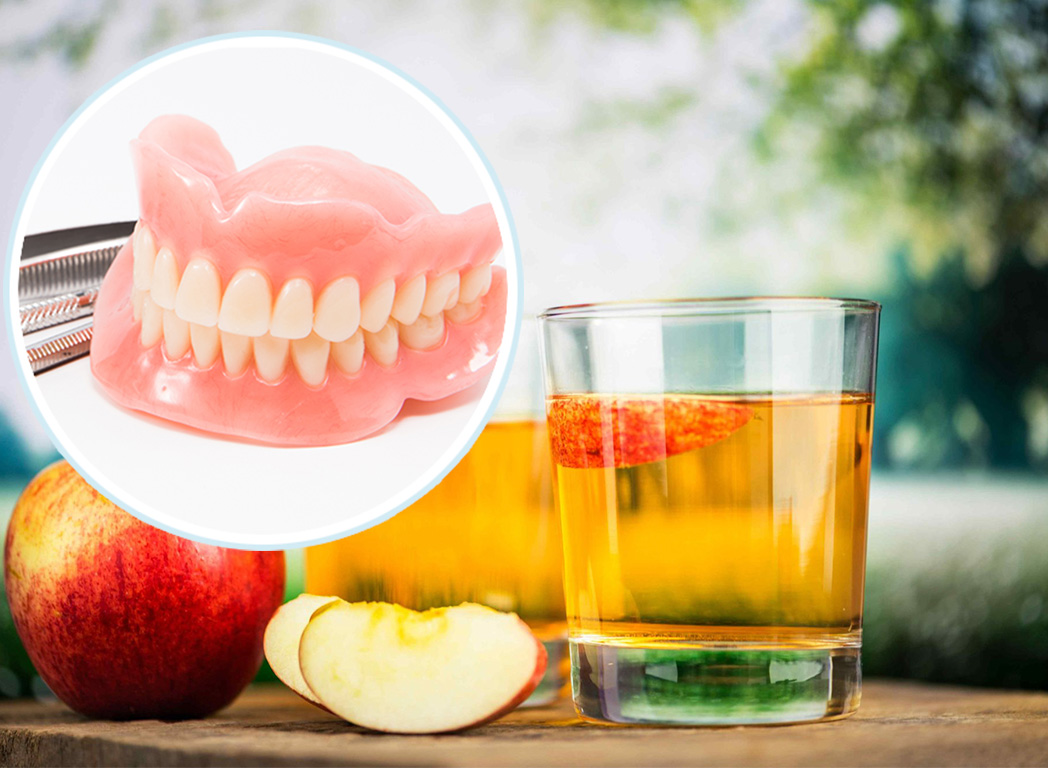
How to Clean Dentures With Apple Cider Vinegar
Plain white vinegar has been used for years to keep dentures clean and bacteria free, but did you know that using Apple Cider Vinegar can have the same cleaning benefits and help to keep your pearly whites, pearly white?
Because the PH level of Apple Cider Vinegar is so high, it kills bacteria, dissolves tartar and plaque that builds up over time, and can ward off Denture Stomatitis (a yeast grown fungus). It has been shown in recent studies to have all the best benefits of any denture cleaning solution, but by taking a more natural approach to it – one that you can do daily if you choose.
To make a solution, all you need to do is add equal parts of clean, warm water and apple cider vinegar. Let your dentures sit in this solution for at least a half an hour – overnight will give you the best results.
After your dentures have soaked in the solution, take a very soft bristled brush, and brush them like you would with any other cleaning solution. Being sure not to miss any spots and to remove any adhesive. You may have to rinse between brushing to be sure you haven’t missed anything.
Once you have brushed them thoroughly, rinse the dentures very well under clean running water.
This easy process will also help to eliminate future build ups and bacteria if done often, which may help to extend the life of your dentures.
Olds Denture and Implant Centre is here to answer any of the questions you may have in regard to using apple cider vinegar to clean your dentures. Call us today!
 28 Oct 2021
All about smiles dentures
All about smiles dentures
Olds Denture & Implant Centre knows that the process of getting dentures or implants can be a stressful time for people. Which is why they strive to make this as easy and pain free as possible while providing the best care they can for their patients. This is an easy guide to many of the questions you may have regarding dentures and implants.
What are dentures and implants?
Dentures and implants are a set of artificial teeth, designed to provide you with all of the benefits of a full set of natural teeth such as:
- Restoring your ability to eat and chew food
- Defining your jaw line and improving your natural smile
- Helping to regain your ability to speak clearly and understandably
- Natural, healthy-looking gums
Typically, dentures today are made of resin or porcelain. The type of material that your dentures are made of can be one of the biggest influencers of cost, but could make a world of difference for you. Your dentist or denturist will be able to help you decide which is appropriate for you.
Types of Dentures
There are many types of dentures that your dentist or denturist may choose from, in this article, we will discuss the most commonly used.
These three types are:
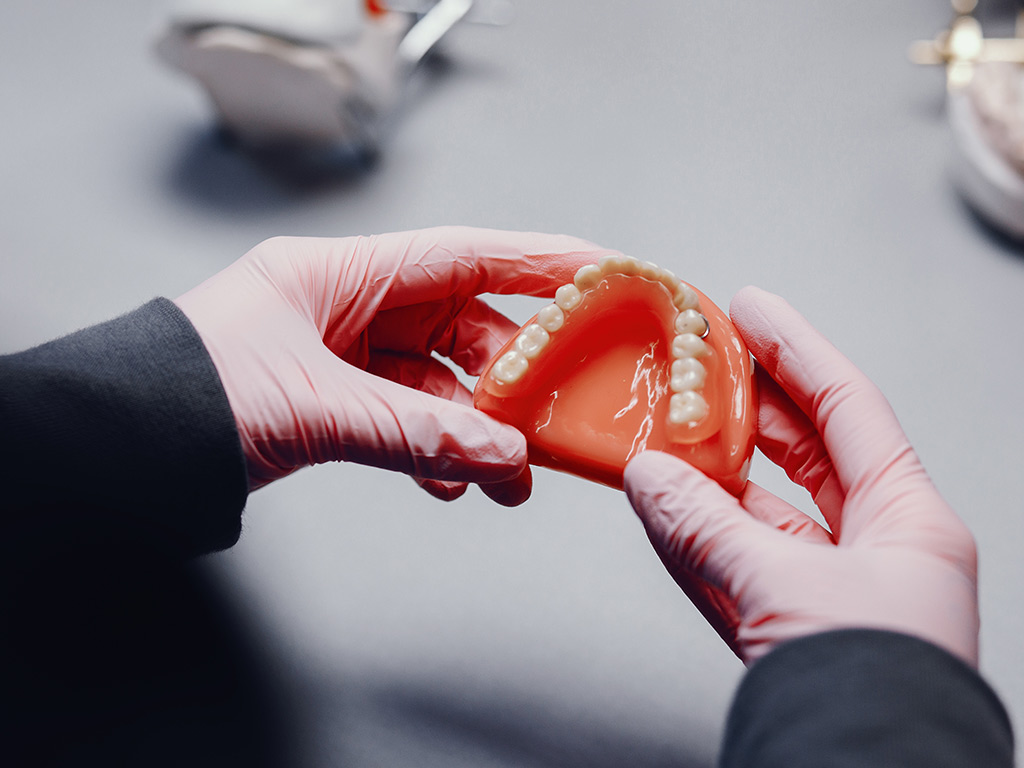
The first is called a complete denture. This denture will sit on top of your gums and will be removable in full. This is made by your dentist after taking a mold of your mouth and making a model of it, making sure that the denture will sit comfortably in your mouth.
The second denture type is called a bridge or partial denture. This is made the same way as the complete denture but is designed to only fill a partial area of your mouth. Unlike implants, they use one or more of your surrounding teeth to hold on to the bridge – this will then fill the gap of missing teeth.
The third is called a dental implant. This is intended to replace only a few teeth in one section of your mouth. This is also removable for cleaning and comfortability purposes. They are attached to metal posts that are set beneath the gums, in the bones of your jaw. Implants offer a stronger bite and wont slip. These are usually implanted by an oral surgeon.
Is this process expensive?
There are many factors that contribute to the prices such as materials used to make the denture, any prescriptions needed for the patient, procedures needed to be done before and after to ensure the dental health and safety of the patient, and the aftercare of the dentures. Though they may seem expensive, this investment will prove its worth! Make an appointment with Olds Denture Centre today for your free consultation to clarify the cost.
How long does this process take?
Getting your mouth ready and having your dentures made, completely depends on the individual. The experience is different for many. There is groundwork to be done – in the way of having teeth pulled or treating an existing irritation or condition in the mouth. The dentist will then decide if you need a complete denture, a bridge or partial denture or if it is in your best interest to have a dental implant surgically put in.
Some patients may need to have teeth pulled beforehand as well. In this case, it will take time for the patients mouth to heal.
The dentist will then have to wait to take a mold of the patients’ mouth. When they are able to make the denture or implant, the dentist will need to be precise when making the dentures the correct size, shape, color and other specifications to match each individual patient perfectly.
Dentures need to be a specific size and shape for your mouth to reduce wear and injury to your mouth.
After being fitted for your dentures, It can take some time for you to be comfortable wearing them every day.
Does this hurt?
This process can be painful for some people, every patient’s experience is different and will depend on the amount of work needed to be done before or during this process. Having your teeth pulled and/or having other dental treatments (such as gum grafting) to ready the mouth for your dentures can be painful and uncomfortable.
After you have been fitted with dentures and are just starting to wear them, your gums can become irritated and may need lots of rest between uses. Your dentist should be able to make suggestions that can help with your comfortability and occasionally a ‘tweak’ is needed to be made.
How do I take care of my dentures?
When you have received your denture(s), you will be shown how to care for your dentures. It will be stressed to you that your denture will need to stay clean and wet. You should never let them dry out or go too long between cleans.
Dentures and implants that are too big, click, or don’t seem to fit well should be adjusted by your dentist right away.
A denture cleaning brush or soft toothbrush should be used to clean the denture. A hard brush should never be used to clean the denture because this may scratch it.
The dentist may recommend a non-abrasive paste-like Polident or another cleansing agent to keep them clean.
Dentures should be stored in a container of water or denture cleaning solution overnight while you sleep.
In the morning, take your dentures out of the water or solution and brush them gently to remove any debris or leftover adhesive before rinsing them and reapplying new adhesive or putting them back in your mouth. Denture adhesive should never be put directly into the mouth.
Dental implants should be cared for just like your natural teeth, with everyday brushing and flossing.
How do I keep my dentures in?
The dentist will give you a recommendation of which adhesive to use. This will be applied to the denture directly and never to the mouth directly. Always read the instructions and information pamphlet provided with the adhesive and be sure that you are not allergic to any of the ingredients.
First, clean and dry the denture and lightly brush your gums and rinse out your mouth. The adhesive should be applied to the denture in thin strips in the middle of the underside of the denture, not to close to the outside.
Press the denture to the gums and hold firmly for a few seconds up to a minute. Bite down if this will help you to hold it in place.
The denture should stay in place at this point. Dental implants do not need adhesive. Dentures that fit well should not need adhesive after you have gotten used to wearing them.
If at any time you find that your dentures or implants do not fit right and do not feel comfortable, you should repeat the process and make sure it is fitting properly before you try to eat food or bite down on anything.
If the denture needs to be adjusted in any way, you should make your dentist aware immediately.
Denture and Implant maintenance
Now that you have your denture(s)/implant(s) and know how to care for them, be sure that you book follow-up and maintenance appointments with your dentist as often as they recommend.
Dentures may need to be replaced or adjusted every 5 years, these appointments are important to maintain the health and safety of the patient. Broken or damaged dentures can result in cuts or bacteria build-up that can harm or injure the patient.
Call Olds Denture & Implant Centre today if you would like a free consultation to have all of your questions answered.